文/US Taiwan Watch: 美國台灣觀測站
【白宮公布川普第二任期的首份國家安全戰略】
先別管小紅書了,現在全世界最火熱的文件是這個小白書:白宮宣佈了川普第二任期的首份國家安全戰略。
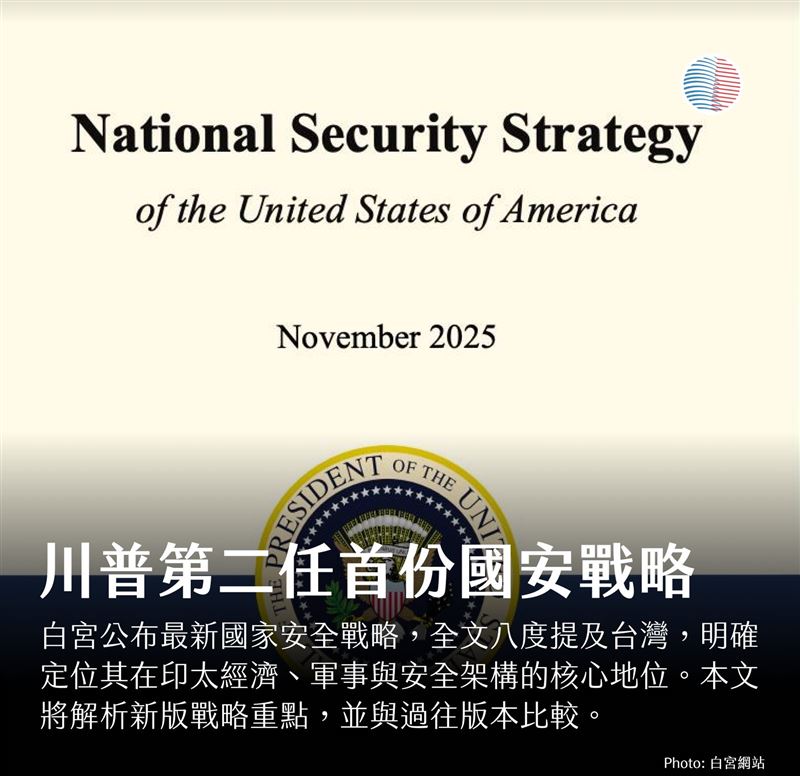 白宮公布川普第二任期的首份國家安全戰略。(圖/翻攝自美國台灣觀測站)
趕快來看一下內容,其中台灣很顯然是美國在印太區域的重中之重,不管是經濟方面或者軍事與安全層面。以數量上來看,台灣被提到8次,主要重點有三:
一、台灣在半導體製造的領先地位、鄰近全球重要航道,以及位處進出第二島鏈以及連結東北亞與東南亞的戰略要地,使得美國必須在此區維持軍事優勢(以嚇阻中國);
二、美國會要求盟友提升軍備以及提升嚇阻能力的投資;
三、美國要求台灣及澳洲增加軍費。
拜登時代的國家安全戰略提到台灣7次,首先強調台海和平穩定的重要性,重申基於一法三公報六保證的一中政策,不支持台灣獨立,並支持台灣加強自衛能力以抵抗武力脅迫。 更早之前的川普第一任期的國家安全戰略只提到台灣3次,強調基於台灣關係法的一中政策提供台灣嚇阻脅迫的防衛需求。
看得出來川普第二任期對台灣的重要性有更具體的描述(半導體、供應鏈安全、地緣政治要地),但對於一中政策或一法三公報六保證,僅用「長年宣示的政策」模糊帶過,這很符合川普政府比較不喜歡制度性承諾和既有法律框架的特性,跟拜登的作風相反,但實際上對台灣推動各種合作進程是相同的。另外這一份NSS也更強調美國「要求」台灣提升自衛能力,無論是提升軍費或投資,而不僅僅美國「提供支持」。
光從與台灣相關的章節就看得出,今年的NSS希望達成雙向溝通。
如果過去主要是對美國強調對台灣的長久承諾,這次的NSS一來是對美國國內受眾強調台灣的重要性,一來也是告訴台灣方面要肩負更多自衛的責任。這對台灣國內各政黨,特別是反對追加國防特別預算者,是再清楚不過的訊號。
至於中國部份,昨天Politico披露財長貝森特曾要求NSS修改涉中措辭。如果看這一份NSS,提及「China」或「PRC」的部份都有減少。2017年33次、2022年55次,這次則只有21次。而且相較於過去指出中國在軍事及經濟影響力的全球擴張,這次的NSS主要強調中國在經濟層面對美國帶來的挑戰。換句話說,就算是探討台灣面臨的安全威脅,中國也沒有被特別指名。
何以至此?我們認為還是延續川普對中國的一貫做法,就是「立場清晰,語言模糊」。也就是不在言語上刺激中國,但在實際作為上強化對中嚇阻能力,會是更務實的作為。這從川普上任以來在政治安全領域少談台灣,甚至外媒一度報導他和高市早苗通話時建議,立場無需後退,但言辭不必刺激中國,都可見一斑。整份NSS在印太區域的重點,其實就是要強化嚇阻的能力,只是完全沒有明講是為了誰。所以沒有提到中國,阿共方面也不需要太開心,畢竟印太區域盟友加強軍備能力只有唯一的一個目的,就是嚇阻中國對外侵略的野心。
--以下為提及台灣部份原文--
1. A favorable conventional military balance remains an essential component of strategic competition. There is, rightly, much focus on Taiwan, partly because of Taiwan’s dominance of semiconductor production, but mostly because Taiwan provides direct access to the Second Island Chain and splits Northeast and Southeast Asia into two distinct theaters. Given that one-third of global shipping passes annually through the South China Sea, this has major implications for the U.S. economy. Hence deterring a conflict over Taiwan, ideally by preserving military overmatch, is a priority. We will also maintain our longstanding declaratory policy on Taiwan, meaning that the United States does not support any unilateral change to the status quo in the Taiwan Strait.
2. America’s diplomatic efforts should focus on pressing our First Island Chain allies and partners to allow the U.S. military greater access to their ports and other facilities, to spend more on their own defense, and most importantly to invest in capabilities aimed at deterring aggression. This will interlink maritime security issues along the First Island Chain while reinforcing U.S. and allies’ capacity to deny any attempt to seize Taiwan or achieve a balance of forces so unfavorable to us as to make defending that island impossible.
3. We will also harden and strengthen our military presence in the Western Pacific, while in our dealings with Taiwan and Australia we maintain our determined rhetoric on increased defense spending.











 5 顆
5 顆  10 顆
10 顆  15 顆
15 顆  20 顆
20 顆